Medunu

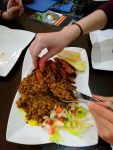
In diesem Blogeintrag werde ich ein wenig über meine Erfahrungen mit dem Essen hier in Ghana berichten. Da ich alleine in meiner Wohnung lebe, sind bei mir Zuhause noch nicht so viele einheimische Gerichte auf den Tisch gekommen. Besonders wenn es schnell gehen muss, wird es dann der Einfachheit halber ein Nudel- oder Reisgericht. Trotzdem habe ich schon durch das Essen an der Straße, in Restaurants, durch Einladungen oder Besuche bei meinem Mentor und seiner Familie einiges von der ghanaischen Küche probiert. Bis jetzt, so viel lässt sich sagen, bin ich noch nicht enttäuscht worden (gut, vielleicht mal von meiner ersten selbstgemachten Tomatensoße mal abgesehen. Mag sein, dass ich das eine Gewürz, wer weiß was das war, aus meinem Kühlschrank nicht hätte benutzen sollen). Sehr viel wird hier „fried rice“ mit Hähnchen gegessen. Dazu wird häufig dann Salat und eine Tomatensauce mit viel Pfeffer und Chili gereicht. Das geht einfach und schnell und wird daher auch viel an der Straße verkauft und bei Veranstaltungen als Lunch gereicht. Besonders gerne esse ich „Redred“ das ist ein Gericht aus Bohnen, die dann mit „fried plantane“, also frittierten Kochbananen zubereitet wird. Besonders lecker ist Fufu. Das ist ist ein fester Brei, der aus Maniok und einem kleinen Anteil Kochbananen zubereitet wird, in dem erst Maniok und Kochbananen gekocht werden und dann mit einem großen Mörser per Hand zu diesem Brei gestampft werden.
Es wird mit den unterschiedlichsten Soups serviert und drüber hinaus häufig als Beilage verwendet. Wichtig! Fufu wird nicht gekaut, sondern einfach ohne zu kauen, geschluckt. Das ist zugegebenermaßen etwas ungewohnt, wenn man es das erste Mal macht. Aber man gewöhnt sich auch genauso schnell daran.
Zum Frühstück esse ich immer Brot und Obst. Das Brot, dass es gibt lässt sich in zwei „Arten“ unterteilen. Da gibt es einmal „Teabread“ und zum anderen „Sugarbread“. Ich glaube der Unterschied besteht darin, dass bei dem Teabread die Kruste ein wenig härter ist, als bei dem Sugarbread. Das Obst ist immer sehr frisch und man schmeckt die Sonne, die es gesehen hat.
Auch sehr gerne esse ich „fried yam“. Yam ist geschmacklich vergleichbar, mit Kartoffeln. Genauso, wie die Kartoffel, kann man Yam nicht nur frittieren, sondern auch kochen oder in der Pfanne anbraten. Ist man unterwegs und bekommt Hunger, muss man sich nur umschauen und findet bestimmt etwas zu Essen, denn immer sind Männer und Frauen unterwegs, die das unterschiedlichste an Essen und kleinen Snacks verkaufen.
Als ich die ersten Tage in der Schule war, hat eine Lehrerin, die gerade ihr Essen ausgepackt hatte:“You are invited.“ Zunächst wusste ich nicht, was sie meinte. Doch schnell wurde mir klar, dass sie mich zum „Mitessen“ eigeladen hatte. Erst langsam ist mir klar geworden, dass das hier höflich ist. Wann immer man selbst etwas isst, lädt man Menschen um sich herum mit den Worten „You are invited“ oder auf Ewe „Medunu“ dazu ein, mit zu essen.

Außerdem…

Letzte Woche war in ganz Ho für alle Basic Schools eine Sportwoche. Also auch an meiner Schule. Als ich montags durch das Tor auf den Hof der E.P. Basic School Ho Heve gegangen bin, sind mir die ganzen Kids aufgefallen, die die unterschiedlichsten Sportarten ausübten. Das ging von Fußball über Volleyball bis hin zu Basketball. Da eigentlich sonst nur Freitags die Klassen Sportunterricht haben, habe ich eine Lehrerin gefragt, was die Kids da machen. Es ist eine Sportwoche, sagte sie. Am Donnerstag und Freitag würden wir uns mit drei anderen Schulen auf einem Sportplatz versammeln und in den unterschiedlichsten Disziplinen gegeneinander antreten. Der Anfang dieser Woche war also zum Üben der Sportarten gedacht. Ich habe also in dieser Woche wenig unterrichtet, sondern viel mehr beim Basketball zugeschaut, beim Volleyball mit angefeuert, die Lehrer unterstützt und viel mit Fußball gespielt. Am Donnerstagmorgen haben sich dann alle Lehrer und Schüler auf dem Sportplatz der Mauwli Senior Highschool versammelt. Ein DJ sorgte für die musikalische Untermalung. Heute waren die Leichtathleten dran. Es ging los mit den 2000m – Mädchen und den 5000m – Jungen. Sowohl die Mädels, als auch die Jungs haben sich größtenteils gut geschlagen und bis auf einen jungen Herrn, haben alle sicher das Ziel erreicht. Die Sonne war sehr stark, weshalb viel Wasser einfach nur zum Abspritzen der Sportlerinnen und Sportler genutzt wurde. Auf die Langstreckenläufe folgten die 800 und 400m Mädchen und Jungen. Bei den 400m Jungen gewann ein Junge aus der 8. Klasse meiner Schule. Das hat sowohl mich als auch alle anderen der Lehrer der Basic School Ho Heve gefreut! Bei den darauf folgenden 200m ist er nochmal gelaufen. Der arme Junge dachte ich. Das hätten mir meine Trainer damals beim Leichtathletik nicht geraten. Aber er lief so viel schneller als die anderen Jungs und gewann auch dieses Rennen. Meinen Respekt hat er dafür auf jeden Fall.
Am Freitagmorgen war das Wetter nicht so gut, sondern deutlich kühler. Gut für die Sportler. Gespannt verfolgte ich die Fußballspiele und Volleyballmatches. Die Mädels und Jungs haben sie alle echt angestrengt und ihr Bestes gegeben. Klar jedes Team wollte für seine Schule gewinnen. Sehr schön fand ich es zu sehen, wie die Lehrerinnen und Lehrer mit ihren kleinen Sportlern mitfieberten. Viele wollten oder konnten nicht still sitzen bleiben, sondern standen immer wieder auf, um vom Rand des Spielfeldes die Fußballerinnen und Fußballer anzufeuern und ihnen Tipps zuzurufen.

Gerade war die Fußballmannschaft der Jungen unter 15 meiner Schule an der Reihe und hatte leider beim Elfmeterschießen 6 zu 7 verloren, da fing es an, zu gewittern. Ich dachte noch, dass ich unter dem Zelt, das extra für die Lehrer aufgestellt worden war, damit sie vor der Sonne geschützt die Veranstaltung beobachten konnten, nicht nass werden würde. Tja falsch gedacht. Es konnte aber auch niemand damit rechnen, dass es so plötzlich so stark anfangen würde zu regnen. Nach zwei Minuten konnte das Zelt dem Regen nicht mehr standhalten. Mit allen anderen – Schülern, Lehrern und Helfern- habe ich mich unter einem Dachvorsprung untergestellt. Und darauf gewartet , dass der Regen aufhört. Einige Jungs sprangen auf der Wiese herum und warfen sich in die Pfützen. Ich muss zu geben, dass ich das auch ganz gerne mal gemacht hätte. Denn wann haben wir in Deutschland mal einen Regen, bei dem es so angenehm warm ist, dass man gerne raus möchte. Als der Regen eine halbe Stunde später aufhörte, waten alle mehr oder weniger klatschnass und durchgefroren und die weiteren Turniere wurden auf Samstag verschoben. Ich bin gespannt darauf, ob meine Schule noch ein paar Turniere gewinnen kann nach Hause gegangen.
Mein Leben in Notsé

Hallo zusammen und herzlich Willkommen zu meinem zweiten Blogpost!

Da ich ja jetzt schon sechs Wochen in Togo und schon einen Monat in Notsé in meiner Einsatzstelle bin, dachte ich, es wäre doch an der Zeit, euch mal ein bisschen vom Leben hier vor Ort und meiner Arbeit zu erzählen. Inzwischen habe ich mir nämlich so einigermaßen einen Überblick verschafft und kenne so einigermaßen die Abläufe in der Kirche und der Schule.

Zu erst einmal zu meiner Unterbringung bzw. den “Rahmenbedingungen” meines Aufenthaltes:

Ich wohne in Notsé, einer Kleinstadt etwa 60 km nördlich von der Hauptstadt, die in 1 ½ bis 2 Stunden mit dem Auto von Lomé aus zu erreichen ist. Hier wohne ich ziemlich zentral auf dem Gelände des CEPRODED, kurz für “Centre Protestant pour le Developpement Durable”, also evangelisches Zentrum für Nachhaltige Entwicklung. Hier gibt es zum Beispiel eine Krankenstation und eine Art Bauernhof, und hier werden viele Tagungen und Schulungen für Verantwortliche aus kleineren Dörfern durchgeführt, wo sie lernen, wie sie die Situation dort verbessern können. Neben meiner Wohnung gibt es noch andere Wohnhäuser des Verwaltungspersonals, in denen auch mehrere Familien mit Kindern wohnen.

Die Leute hier im CEPRODED fühlen sich ziemlich verantwortlich für mich und haben mich direkt sehr herzlich aufgenommen. Sie unterstützen mich, wo es geht, und durch die Hilfe vor allem von Albert, dem Finanzverwalter des Zentrums, und seiner Frau Virginie, habe ich mich direkt gut in Notsé zurecht gefunden und wie zuhause gefühlt. So haben sie mich direkt am ersten Sonntag zum Mittagessen eingeladen und auch sonst verbringe ich viel Zeit bei ihnen im Haus und mit ihren drei kleinen Kindern. Auch hat Virginie mir schon geholfen, auf dem Markt einzukaufen, was schwieriger ist, als gedacht, wenn man keine Ahnung hat, wie viel die Sachen zu kosten haben und wo man in dem Gewusel was findet. Außerdem hat sie mir schon beigebracht, ein paar typisch togolesische Gerichte zu kochen, was echt Spaß macht.

Jetzt aber zu erst einmal zu meiner Arbeit: Ich arbeite hier im Collège Protestant von Notsé, also einer Art evangelischem Gymnasium. In Togo ist Deutsch ein Wahlfach ab der Oberstufe, also auf dem Lycée. Hier begleite ich den Deutschlehrer in den Unterricht und er stellt mir viele Fragen und ich kann oft von dem Leben in Deutschland erzählen, was nett ist. Aber meine Hauptaufgabe ist der eigenständige Deutschunterricht in den Klassen 6 bis 9, wo ich in jeder Klasse, insgesamt acht, einmal die Woche bin. Der Unterricht wird aber nicht benotet und ist eher wie eine Art AG, weil die Kinder sonst viele Freistunden haben und unbeschäftigt sind.

Die Schülerinnen und Schüler sind ziemlich motiviert und so macht es viel Spaß, dort zu unterrichten. Die ersten Wochen habe ich besonders mit den kleinen erstmal viel gesungen, zum Beispiel “Gottes Liebe ist so wunderbar”, was sie sehr begeistert hat, da die meisten Kinder hier singen lieben. Mit den größeren habe ich die Begrüßung und Vorstellung wiederholt und das Alphabet und die Zahlen geübt. Da ich die erste Woche mir erstmal nur den Unterricht der anderen Lehrer angesehen habe, konnte ich mir danach ganz gut vorstellen, was für Methoden die Kinder so gewöhnt sind und wie die Lehrer hier so Sprachen beibringen. Der Unterricht ist relativ frontal gehalten, was aber auch daran liegt, dass es vierzig bis fünfzig Schüler auf relativ engem Raum in einer Klasse gibt, so dass zb. Gruppenarbeit nicht möglich wäre. Um die deutschen Wörter zu üben, spreche ich sie den Kindern vor und sie wiederholen sie dann, oder man kann auch mal einzelne Kinder an die Tafel bitten, um Aufgaben zu lösen. Leider gibt es in vielen Fächern keine Bücher, weswegen die Lehrer ziemlich viele Texte diktieren müssen. Dadurch geht natürlich ziemlich viel Zeit verloren, weshalb die Lehrer häufig noch nachmittags zusätzlichen Unterricht zum Aufholen des Stoffes machen.

Insgesamt finde ich die Atmosphäre in der Schule ziemlich angenehm und entspannt. Die Lehrer sind unter Umständen etwas strikter im Unterricht mit den Schülern, haben aber sonst ein gutes Verhältnis zu ihnen und machen gerne Witze und so weiter. Auch die Stimmung im Lehrerzimmer ist gut und ich wurde sehr positiv und interessiert aufgenommen. Da die meisten Lehrer jung sind, konnte ich mich schon mit einigen ganz gut anfreunden. Da ich aber das gleiche Alter wie viele Schülerinnen und Schüler in der Oberstufe habe, habe ich auch hier schon viele Kontakte knüpfen können und verbringe die Pause abwechselnd im Lehrerzimmer oder bei Schülern, von denen ich gerne zum Essen eingeladen werde, was hier ziemlich üblich ist. Auf dem Schülgelände werden nämlich ganz viele verschiedene Gerichte und auch Süßigkeiten verkauft.

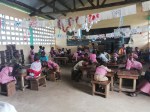
Wenn ich Freistunden habe, gehe ich aber auch häufig zum Kindergarten, der nebenan ist. Hier helfe ich der Kindergärtnerin, die sich um vierzig Kinder alleine kümmert, wo es geht ein bisschen, vor allem lerne ich aber selber ganz viel, da die meisten Kinder nur Ewe sprechen und ich so gezwungen bin, mir das ein oder andere anzueignen. Es gibt zwar nicht viel Spielzeug, aber die Kindergärtnerin beschäftigt die Kinder mit Bewegungspielen auf dem Hof, mit Liedern oder kreativen Aufgaben. Unten könnt ihr ein Foto von der Schule bzw. einem Klassenraum und dem Kindergarten sehen.

Jetzt noch mal ein bisschen was zu meinem Alltag und meiner Freizeit. Da ich meistens nur bis 12 Uhr oder 13h30 Unterricht habe, habe ich am Nachmittag relativ viel freie Zeit zur Verfügung. Da die Schule schon zwanzig vor sieben beginnt und ich dementsprechend früh aufstehen muss, ruhe ich mich, wie die meisten Leute hier, nach der Schule erstmal ein bisschen aus, was aber auch an der Hitze liegt, in der man nicht so richtig Lust hat, etwas zu machen. Danach koche ich meistens etwas und erledige etwas Hausarbeit. Oft gehe ich auch zum Beispiel einkaufen und quatsche dann gerne auch länger mit den Verkäufern in den kleinen Läden nebenan, was hier ganz normal ist. Fast jeden Abend mache ich etwas in der Kirche, zweimal die Woche gehe ich zum Jugendchor, zweimal die Woche zur Bandprobe, wo wir begleitet von Schlagzeug, Gitarre und Klavier singen, und noch einmal die Woche zu einer Bläsergruppe, der sogenannten Fanfare, wo ich Querflöte mitspiele. Das macht alles ziemlich viel Spaß, da hier viele gleichaltrige Jugendliche sind, und momentan hält sich mein Freizeitstress auch noch in Grenzen :). Am Sonntag singen wir dann fast immer mit dem Chor und begleiten die Lieder mit der Fanfare, was ordentlich für gute Stimmung sorgt. Während die Kollekte eingesammelt wird und alle tanzend nach vorne gehen, spielen wir oft auch mit unserer Band.

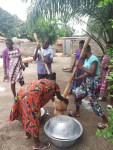
Die Lieder sind zwar alle auf Ewe, was es für mich am Anfang etwas schwierig gemacht hat, mitzusingen. Man hört sich aber doch einigermaßen zügig ein. In der Band hat mir aber netterweise mein Nachbar, der die Band leitet, alle Texte in ein Heft geschrieben, und wir üben jetzt immer zusammen. Insgesamt ist besonders der Jugendchor sehr cool, weil wir nicht nur zusammen proben, sondern auch oft gemeinsam etwas unternehmen. So macht der Chor einmal im Monat ein Fest, wo gemeinsam Fufu gekocht und gegessen wird und dann getanzt und gesungen. Das war echt eines meiner Highlights letzten Monat und ich freue mich schon aufs nächste Mal. Unten seht ihr ein Foto von uns beim Fufu stampfen.

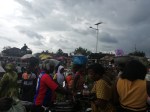
Mein Wochenende ist hier immer ziemlich vollgepackt. Samstag wasche ich morgens nämlich immer erst einmal meine Kleidung, was bei Handwäsche entsprechend lange dauert. Samstags ist außerdem Markttag, es kommen also Leute von überall her und bauen ihre Stände auf. Es gibt nicht nur Obst, Gemüse und sonstige Lebensmittel, sondern auch Haushaltsgegenstände, Geschirr, Kleidung, Schuhe, Stoffe und was man sonst noch so braucht. Inzwischen traue ich mich auch, mal Dinge zu kaufen, die ich nicht kenne, und einfach mal auszuprobieren sie zuzubereiten, wie zum Beispiel Yams oder Kochbananen. Da es in Notsé keinen Supermarkt gibt, ist der Samstag die einzige Chance mal größer einzukaufen. Unter der Woche verkaufen kleine Läden an der Straße zwar Dinge wie Nudeln, Öl, Zucker etc. aber den Haupteinkauf erledigt man auf dem Markt. Unten angehängt ein Foto, wo man vielleicht ein bisschen sich die Atmosphäre auf den Markt vorstellen kann.

Insgesamt esse ich hier ziemlich anders als in Deutschland, da es fast gar keine Milchprodukte gibt und ich auch kein Fleisch kaufe. Morgens esse ich aber wie zuhause häufig Brot mit Rührei oder auch mal Avocado, die hier wächst. Dann esse ich in der Schule morgens oft Nudeln, Reis oder einen Art Kloß aus Maismehl mit scharfer Soße und Fisch, was sehr lecker schmeckt. Sonst isst man hier auch gerne Bohnen zum Frühstück, die mit Palmöl und einer Art Mehl aus Maniok serviert werden, was ich auch sehr gerne mag, oder auch mal Beignets, eine Art fritierter süßer Krapfen. Mittags koche ich dann meistens zuhause, zum Beispiel Yams, was wie Kartoffel schmeckt, oder Nudeln, Reis oder Couscous. Viel wird auch Pate gegessen, ein heißer Brei aus Maismehl, der schnell fest wird und von dem man kleine Stücke abreißt und in eine Soße tunkt. Soßen gibt es hier mit Fisch und Fleisch und sind häufig ziemlich scharf. Besonders lecker finde ich Soßen mit Palmöl, Palmnüssen und Erdnüssen. Außerdem gibt es viel frisches Obst, wie Ananas, die in Notsé wächst, oder Papaya und Melone. Tatsächlich ist die Auswahl an Gemüse ziemlich begrenzt, am meisten werden Tomaten, Aubergine und eine Art spinatähnliches Gemüse gegessen, es gibt aber auch grüne Bohnen, rote Beete und Karotten zu kaufen. Und natürlich viel Chilli. Außerdem ist man viel mit der Hand, besonders Fufu und Pate, aber in der Schule auch Reis und sogar Nudeln. Wenn man das gar nicht gewöhnt ist, ist es schwieriger als gedacht, und erfordert einiges an Geschick. Inzwischen geht es aber schon viel besser und ich lebe nicht mehr in der ständigen Angst, meine gesamte Kleidung vollzusauen.

Soo, jetzt habe ich ziemlich viel erzählt und hoffe, es war nicht zu lang und interessant! Danke fürs Lesen und bis zum nächsten Mal!

Eure Leonie

Thursday, 17th October – We would like to share our vision

The last ten days have passed shockingly fast, and so we woke up to the last day of our youth encounter this morning. After breakfast, we came together for morning devotion one last time, and it looked a little different today. Instead of a singing song or a hearing a verse we exchanged friendly messages or nice comments by writing them on a piece of paper stuck to everybody’s backs. It took a little while until all were finished, which shows already that we as a group have become quite close. Having read all the notes, we continued in our programme.

I think many of us enjoyed very much what followed now. Everybody received a mat and we all lay down and relax. While some calm music was playing, Nane took us on a journey of imagination and we were animated to think about how our life would look like in 2070. So we imagined how we would sit in front of our houses as old ladies and men, what we would have seen and experienced by then and also how we were going to be remembered after we would be gone. Especially imagining what we would like our life to have been like when we would look back one day, and by what values we would like to live made many of us very thoughtful.

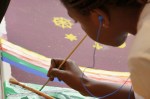
Returning to the present, Nele had a creative task for us. We were supposed to present our vision of the world as we would like it to be in future in one connected drawing. What seemed like quite a challenge at first turned out to be very enjoyable and in the end we spent the rest of the morning and some of the afternoon completing our vision. We were very proud of it in the end! 🙂

After lunch we drew a little more and when we had finished cleaning up we finally presented the communities that should ensure a good life for all we had already crafted on Tuesday. Some of us had made a collage, some had made small houses out of paper and other materials. Our ideal communities often included shared common rooms, gardens or fields to grow our own food and good access to education. Afterwards some of us felt so exhausted that they needed a rest.

So they could relax until supper and Nele continued to work with those who still had enough energy.

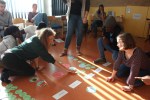
And we really needed it for the following task. Together, we were supposed to formulate goals for a utopia in 2070 and draw up steps how we could reach them in the next decades. This task was everything but easy and, of course provoked many controversial discussions. Especially the threat of the climate crisis became even clearer to us and we realized again how urgent the need for action is. The more time we lose, the more drastic the measures have to become.

For me, it was overwhelming to learn again how fast we need to act and how profound the changes are, that have to be made. But on the other hand, it was also encouraging to see that there are in fact solutions, but we also have to make use of our possibilities.

Given the magnitude of this task, we were not even near being finished when we went down for dinner at six.

At half past seven we came together again and we were visited by Heike Jakobeit, the general secretary of Bremen Mission who came to say goodbye to us, pray with us and give us benediction for our journeys home.

To end the evening, we gave feedback about what we had experienced the past few days. We shared our thoughts and we were very thankful for our team that had organised the encounter so well. So: Thank you Nele, Nane and Emefa for this wonderful time!

After the official part, we exchanged contacts and said goodbye to those who were already leaving.

I think I can speak for all of us when I say that we leave feeling well-informed about the struggles we are facing but we also feel encouraged to use the knowledge we have and do everything in our power to make a positive change.

Thank you to all the people that organised or participated, you have made this time very special!

Anne

Wednesday, 16 October, 2019 – Agriculture is for people not for profit!

Its a wonderful Wednesday morning as early as 8:45am we already gather to take off to Gemüsewerft ( Urban Agriculture) We met Micheal who is the CEO of Gemüsewerft. He welcomes us and talk about his company where they grow vegetables in boxes. They are owning more than 1000 boxes where they plant hop or salat and vegetables in general. Normally farmers work with 20 to 80 ha land but Michaels business owns 0,8 ha divided in several boxes. Also most bigger farmers are using artificial methods for productions. The Gemüsewerft only uses natural environnement and grows only bio-products. Therefore they only grew saisonal vegetables. They are not depending on big companies telling them what and when to grow. Gemüsewerft is working together with one restaurant in Bremen. There is one cook working. Michael loved to describe how they used to send the vegetables to the cook every morning. Michael said the cook looks every morning at the harvest of the last day and decides what to prepare out of it. Usually cooks call farms and order the ingredients they need. Not this procedure! Gemüsewerft is harvesting when it’s the right time for the plant and not for any cooks or companies.

We learned that Germany produces 70% of the worldwide hop and to supply for one family with 4 people you need 1000 square meters. Michael explained to us that in almost every german city is a quater where poorer and less educated people live. There are many children who don’t know what a salad looks like or which part of a tomato plant is eatable. In the future, more and more people will live in cities so the plants will grow on the countryside than more people will never get to see the plants which are sold as their food at the markets. Further Michael explained that the humas developed to be the animal on the planet demanding for most food. That means that we (the people) are waisting too much food.

In the afternoon we were hosting two external experts (Annika and Pauline) who did a workshop with us about food sovereignty. We agreed that sovereignty means that consumers have authorities about their decisions also concerning everyones future. Therefore they are well educated.

We realised that a food chain usually starts with the pre-production. Companies like Monsanto are selling seeds to farmers who grow the plants and then production take place. The farmers are the ones harvesting the finished farm produce. They later process it into non-perishable goods and send to the wholesalers and to retailers and finally to the consumers. But some of the processes of production differ from country to country. Our fellows from Ghana stated that, from the wholesalers there is a powerful chain called Middlemen. They determine the actual prices of the farm produce and they get the most profit.

During the discussion we also realised that there are various problems facing the production from all the three countries ( Germany, Ghana and Togo). some of the problems are 1. poor roads to the farms 2. Inadequate financing 3. there are more import than export etc. we concluded that, we must purchase locally manufactured goods, government intervention( good roads, irrigation etc), we should also encourage more people in farming.

Later in the evening was the Culture night for the Togolese. They talked about the traditional clothes and educate us on how politics work in their country. We played a lot of games like Murder in the dark, follow the pussy cat and so on. Everybody was excited and we all left to get some rest for the next day.

DAVID SELORM NYAGAH

Tuesday the 15th of October – This is our House!

Today on October 15th we had to get up a little earlier to leave the house at 9:30 am. After the prayer we discussed extensively in small groups about advantages and disadvantages as tenants in the respective countries (Togo, Ghana and Germany).

Today we visited the Mietshäuser Syndikat, had a workshop about Living and Housing and finally the Ghanaians prepared a cultural evening which took place in Nane’s house flat.

At 10:30 a.m. we were welcomed by 2 of the residents of the housing project and talked about the project over coffee and tea in the common room. In the newly built building there are about 40 people including 15 children. Emma and Michael the 2 residents explained to us how this project came about, how it looks like with the financing, which support they got from the Mietshäuser Syndikat and which advantages and disadvantages living together brings. Yesterday we watched a movie called „this is our house“ on the topic. So we all had already gained some previous knowledge and afterwards asked a lot of questions.

After the round of questions we got a guided tour of the house. After we took off our shoes Michael showed us his apartment which we all liked very much. Afterwards we went to the terrace and enjoyed the beautiful view. After we thanked Emma and Michael for the great tour, after about 2 hours we unfortunately had to make our way back to the Lidice House. to be in time for lunch.

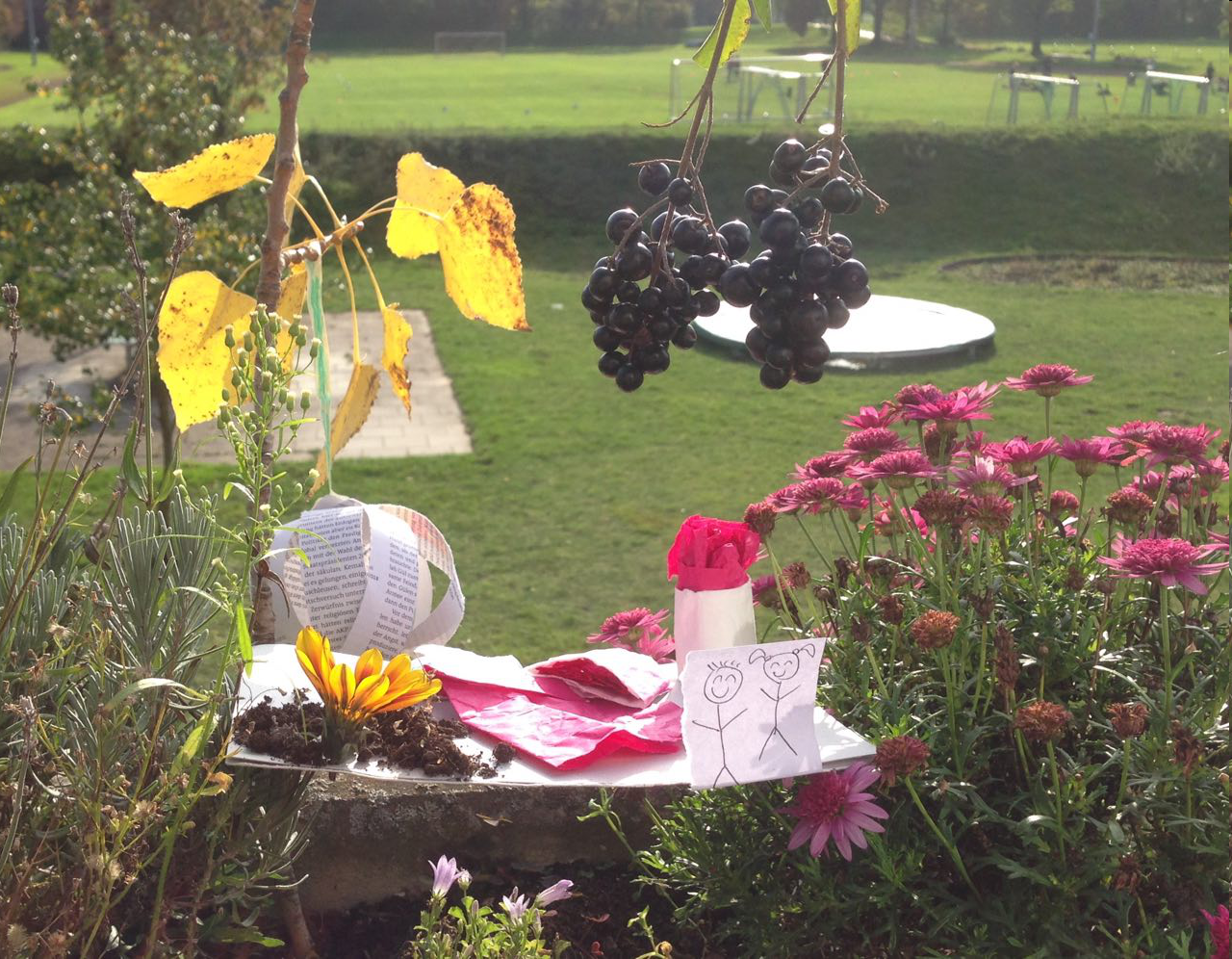
After lunch we continued with a creative workshop. We were allowed to present the „good life“ creatively either individually or in groups. We were provided with various materials for this purpose. We were allowed to use magazines to cut out pictures and create collages, as well as collected branches, leaves and stones that could be used for handicrafts.

At about 16 o’clock the workshop was over and we had free time until 18 o’clock.
Afterwards we went to Nane’s house where the Ghanaians waited for us, because they cooked for the whole group during the cultural evening.

When we arrived the garden was shown to us and afterwards we made ourselves comfortable in the living room until the food was ready and we were called Jollof rice, fried bananas, chicken and salad.

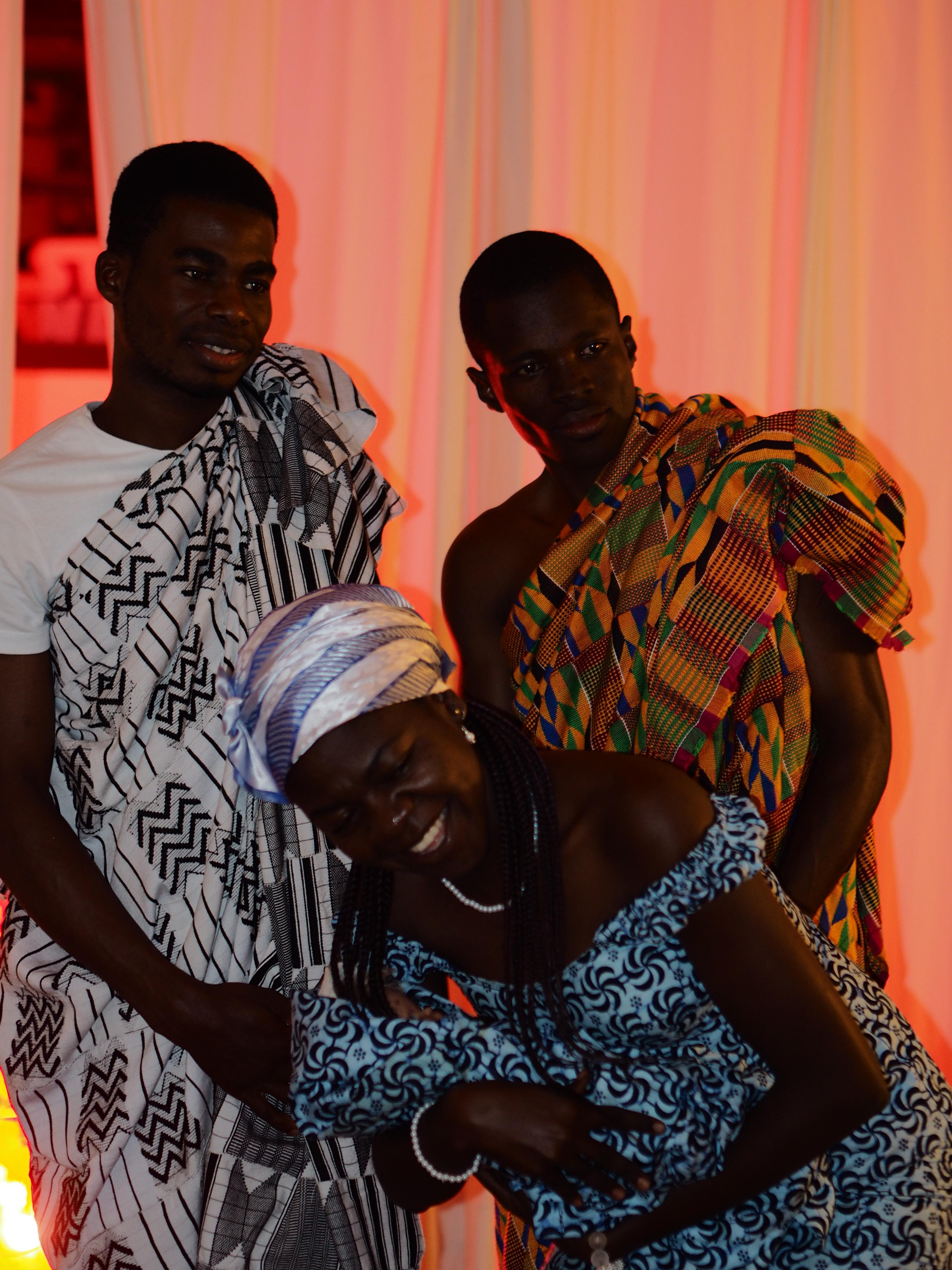
After we all ate the delicious food, the cultural evening started and the Ghanaians imitated an Ewe naming ceremony in traditional robes. Afterwards there was dancing, joking and laughing and we let the evening fade away before we had to go back to the Lidice House.

Clemence and Louise

_______________________

Heute am 15. Oktober mussten wir etwas früher aufstehen um pünktlich um 9:30 Uhr das Haus zu verlassen. Nach der Andacht haben wir in Kleingruppen ausgiebig über Vor und Nachteile als Mieter in den jeweiligen Ländern (Togo, Ghana und Deutschland) diskutiert.

Auf dem Programm steht heute der Besuch des Mietshäuser Syndikat, ein Workshop über Living und Housing und letztendlich werden die Ghanaer einen kulturellen Abend vorbereiten, der in Nanes Haus-WG stattfinden wird.

Um 10:30 Uhr wurden wir von 2 der Bewohnern des Wohnprojektes empfangen und haben uns bei Kaffe und Tee im Gemeinschaftsraum über das Projekt unterhalten. In dem neuerbauten Gebäude wohnen ca. 40 Personen darunter 15 Kinder. Emma und Michael die 2 Bewohner haben uns erklärt, wie es zu diesem Projekt kam, wie es mit der Finanzierung aussieht, welche Unterstützung sie vom Mietshäuser Syndikat bekommen haben und welche Vor und Nachteile das gemeinschaftliche Zusammenleben mit sich bringt. Gestern hatten wir uns einen Film namens „das ist unser Haus“ zum Thema angeschaut. Wir hatten uns also alle schon einiges an Vorwissen erarbeitet und anschließend viele Fragen zu stellen.

Nach der Fragerunde haben wir eine Hausführung bekommen. Nachdem wir unsere Schuhe ausgezogen haben hat uns Michael seine Wohnung gezeigt die uns allen sehr gut gefallen hat. Anschließend sind wir auf die Terrasse gegangen und haben den schönen Ausblick genoßen. Nachdem wir uns bei Emma und Michael für die tolle Führung bedankt haben, mussten wir uns nach ca. 2 Stunden leider wieder auf den Weg zum Lidice Haus machen um rechtzeitig zum Mittagessen zu erscheinen.

Nach dem Mittagessen ging es weiter mit einem kreativen Workshop. Wir durften entweder individuell oder in Gruppen das „gute Leben“ kreativ darstellen. Dafür wurden uns verschiedene Materialien zur Verfügung gestellt. Wir durften Zeitschriften benutzen um daraus Bilder auszuschneiden und Collagen zu erstellen, sowie aufgesammelte Äste, Blätter und Steine die zum Basteln verwendet werden konnten.

Um ca. 16 Uhr war der Workshop zu Ende und wir hatten bis 18 Uhr Freizeit.
Anschließend sind wir zu Nanes Haus- WG aufgebrochen wo die Ghanaer schon auf uns gewartet haben, da sie für die gesamte Gruppe im Rahmen des kulturen Abends gekocht haben.

Als wir angekommen sind , wurde uns der Garten gezeigt und anschließend haben wir es uns im Wohnzimmer gemütlich gemacht bis das Essen fertig war und wir aufgerufen wurden.Es gab Jollof Reis, frittierte Kochbananen, Hühnchen und Salat.

Nachdem wir alle das köstliche Essen gegessen haben, hat der kulturelle Abend angefangen und die Ghanaer haben eine Ewe Namensgebung Zeremonie in traditionellen Gewändern nachgeahmt. Anschließend wurde noch ausgelassen getanzt, gescherzt und gelacht und wir haben den Abend ausklingen lassen bevor wir wieder zurück zum Lidice Haus aufbrechen mussten.

Clemence und Louise

Monday the 15th of October – Visiting Bremen Mission and looking back on Sunday

An Entry for Monday, 15th of October:

This morning we went to visit the headquarters of the Norddeutsche Mission. Heike Jakubeit, the Secretary General welcomed us very warmly and showed us around. The Norddeutsche Mission offices are located in a large and beautiful villa belonging to the church. We had the pleasure of meeting the various leaders of this association, without whom we would not be here.
Unfortunately, I have been sick for two days, which is probably due to the cold climate in Germany. Indeed I am not used to the low temperatures that we have since our arrival and Saturday’s rainy day caused a big cold.

So I spent the rest of the day in bed and this morning Nele accompanied me to the doctor. The good care of Nele, Emefa and the whole group was very supportive and after a long rest in bed and a lot of tea, I feel better.

I would like to add a few words about the rest of the stay that I enjoyed very much. All the new peoples I met and the interesting conversations introduced me to new points of view and inspired me. I am really happy to have this opportunity and I thank everyone for that.

Karine

For my part, I would like to talk about the Klimahaus which I really liked. It was a unique experience to cross these different continents, to discover their fauna and flora as well as their climate. I had to flee the icy Antarctic and preferred to linger under the palms of Samoa. I was really impressed by this museum and the ability to reproduce these different spaces in such a real way. The amount of information has once again allowed me to learn a lot about the climate, how it has changed in recent years and what are the prospects for our future. Thank you for this beautiful excursion.

Louise

__________

Ce matin nous sommes allé visiter le siège de la Norddeutsche Mission. Heike Jakubeit, la secrétaire générale nous a accueillit très chaleureusement et nous a fait visiter les lieux. Les bureaux de la Norddeutsche Mission se situent dans une grande et belle villa appartenant à l’église. Nous avons eu le plaisir de rencontrer les différents responsables de cette association, sans lesquels nous ne serions pas là.

Je suis malheureusement souffrante depuis deux jours, ce qui est surement du au climat froid de l’Allemagne. En effet je ne suis pas habitué aux températures basses qui nous attendaient depuis notre arrivée et la journée pluvieuse de samedi a engendré un grand rhume.

J’ai donc passé le reste de la journée au lit et ce matin Nele m’a accompagné chez le docteur. Les bons soins de Nele, Emefa et de tout le groupe m’ont été d’un grand soutien et après m’être longtemps reposé au lit et avoir bu beaucoup de thé, je me sent mieux.

J’aimerais ajouter quelques mots par rapport au reste du séjour qui m’a beaucoup plu. Toutes les nouvelles connaissances et les conversations interessantes m’ont fait découvrir de nouveaux points de vu et m’ont inspirés. Je suis vraiment heureuse d’avoir cette possibilité et je remercie tout le monde pour cela.

Karine

Pour ma part j’aimerais reparler du Klimahaus qui m’a beaucoup plu. Ce fut une expérience unique de traverser ces différents continents, de découvrir leur faune et leur flore tout comme leur climat. J’ai du fuir l’antarctique qui était glaciale et j’ai préféré m’attarder sous les palmes de Samoa. J’ai vraiment été impressionné par ce musée et la capacité de reproduire ces différents espaces de façon aussi réelle. Le nombre d’informations m’a permis une fois de plus d’apprendre beaucoup sur le climat, comment il a changé durant ces dernières années et quelles sont les perspectives pour notre futur. Merci pour cette belle excursion.

Louise

Sunday 13th of October – 8° East 34′30″

On Sunday morning we got up early to catch our train on time. Our destination: Bremerhaven.

After a half hour train ride in which some could catch up some sleep, we were warmly welcomed in Bremerhaven by the pastor of the Protestant Reformed Church. We were then driven to the church in Leherheide, where we were invited to the divine service.

With the motivating predict of the pastor we could really start the day.

After the service we talked to the members of the congregation and tasted a warm seasonal pumpkin soup.

But we could not stay long, because our next appointment, the Klimahaus Bremerhaven 8° Ost, was waiting at one o’clock.

The Klimahaus Bremerhaven 8° Ost is an adventure museum about climate, climate change and weather. Along the 8th degree of longitude one has the possibility to get to know five continents, their history and culture, but also, what makes it so special, to experience their climate up close.

The world tour began in Bremerhafen and led us into the cool mountains of Switzerland. We crossed green pastures with cows, glaciers and rocks. Then we took a gondola to Sardinia. Here one could get to know very closely the different insects, as well as some reptiles. A few of us were almost frightened by the snakes in the terrarium!

Soon we arrived in Africa. There we crossed Niger and Cameroon. A desert with up to 35° degrees, a West African rain forest at night, Galagos which jumped on trees… All our senses were addressed and the pictures and scenery were supplemented by smells and noises.

After the beautiful warmth of Africa we dived into the ice-cold Antarctic with a temperature of about -6 degrees Celsius. Louise from Togo, with whom I was on my way, ran through to get back to decent temperatures as fast as possible. She could find them in the South Sea island Samoa. Palms, blue sea and beach, coral reefs and fish… It’s quite hard not to get a holiday feeling under such circumstances.

Before it went back to Germany one could marvel at the secrets of the underwater world as well as walk once by the universe. The beautiful starry sky at the end was perfect to meditate on the beauty of our planet.

In the different exhibition areas one could learn a lot about the different climate zones but also, how the climate has changed in the past and how it will develop in the future.

With Louise we still had a short time to look into the last area, which presents possibilities for action to limit climate change. Among them, we were able to identify many topics, such as consumption, which we have already encountered in recent days.

It would have been possible to explore the many details of the different countries for a long time, had it not been for the time.

But our train was waiting for us and at four our tired troop made its way home to be back on time for dinner.

Chiara

________________

Am Sonntag morgen sind wir früh aufgestanden um pünktlich unser Zug zu erwischen. Unser Ziel: Bremerhaven.

Nach einer halbstündigen Zugfahrt in der einige noch etwas Schlaf nachholen konnten, sind wir in Bremerhaven herzlich vom Pastor der evangelisch reformierten Kirche empfangen worden. Wir wurden dann zur Kirche in Leherheide gefahren, wo wir zum Gottesdienst eingeladen waren.

Mit der motivierenden Predikt des Pastors konnten wir nun richtig in den Tag starten.

Nach dem Gottesdienst haben wir uns mit den Mitgliedern der Gemeinde ausgetauscht und eine wärmende saisonale Kürbissuppe gekostet.

Lange konnten wir uns jedoch nicht aufhalten, denn um eins wartete unser nächster Termin, das Klimahaus Bremerhaven 8° Ost.

Das Klimahaus Bremerhaven 8° Ost ist ein Erlebnismuseum zu den Themen Klima, Klimawandel und Wetter. Entlang des 8. Längengrades hat man die Möglichkeit fünf Kontinente, deren Geschichte und Kultur kennenzulernen aber auch, was es ganz besonders macht, deren Klima hautnah zu erleben.

Die Weltreise fing in Bremerhafen an und führte uns in den kühlen Bergen der Schweiz. Wir durchquerten grüne Weiden mit Kühen, Gletschern und Felsen. Dann ging es mit einer Gondel weiter nach Sardinien. Hier konnte man hautnah die verschiedene Insekten, sowie einige Reptilien kennen lernen. Ein paar von uns haben sich beim Anblick der Schlangen im Terrarium fast erschreckt!

Bald kamen wir in Afrika an. Dort durchquerten wir Niger und Kamerun. Eine Wüste mit bis zu 35° Grad, ein westafrikanischer Regenwald bei Nacht, Galagos die auf Bäume hüpften… Alle unsere Sinne wurden angesprochen und die Bilder und Kulissen wurden durch Gerüche und Geräusche ergänzt.

Nach der schönen Wärme Afrikas tauchten wir in die eiskalte Antarktis mit einer Temperatur von ca. −6 Grad Celsius. Louise aus Togo mit der ich unterwegs war, ist quasi durchgerannt um so schnell wie möglich wieder an anständige Temperaturen zu gelangen. Diese konnte sie in der Südseeinsel Samoa finden. Palmen, blaues Meer und Strand, Korallenriffe und Fische… Ganz schön schwer unter solchen Umständen kein Urlaubsfeeling zu bekommen.

Bevor es zurück nach Deutschland ging konnte man die Geheimnisse der Unterwasserwelt bestaunen sowie einmal durch den Weltall spazieren. Der wunderschöne Sternhimmel am Ende eignete sich prima, um über die Schönheit unseres Planet zu meditieren.

In den verschiedenen Ausstellungsbereichen konnte man sehr vieles über die verschiedene Klimazonen lernen aber auch,

wie sich das Klima in der Vergangenheit verändert hat und wie es sich künftig entwickeln wird.

Mit Louise hatten wir noch kurz Zeit in den letzten Bereich reinzuschauen, der Handlungsmöglichkeiten zur Begrenzung des Klimawandels vorstellt. Darunter konnten wir viele Themen wiederkennen, wie zum Beispiel Konsum, die uns in den letzten Tagen schon begegnet sind.

Man hätte noch lange die vielen Details der verschiedenen Ländern erkunden können, wäre die Zeit nicht gewesen.

Unser Zug wartete aber auf uns und um vier machte sich unsere müde Truppe auf dem Weg nach Hause, um pünktlich fürs Abendessen zurück zu sein.

Chiara

Saturday, 12th of october City tour

After all the interesting new impressions of the last days, we were looking forward to a day of free time – in the city. Unfortunately the weather was going to ruin our plans.
In the morning, still hoping for the rain to stop, we started our walk to the city after the devotion by David and Marius. Emefa showed us around the city center. We walked through the Schnoor quarter, visited the Dom of Bremen and admired the beautiful marketplace with the Roland statue, the Schütting and the old town hall. In the Böttcherstraße we listened to the famous 30 bells which play traditional songs and melodies several times per day. We finished our tour at the Schlachte next to the Weser.
By this time, not many had been able to keep their feet dry, so we were glad to take a break at the African restaurant „Mommies corner“ for lunch. We enjoyed delicious Fufu, Banku and many other dishes.
Originally, we wanted to spend the afternoon at the Thanksgiving celebration of an urban gardening project next to the Klimawerkstadt, which we had visited on Thursday. The gardeners wanted to prepare soup out of their harvested vegetables and make fresh apple juice. But due to the bad weather, we had lost motivation to go there. Some took the tram to the city center, some went straight back to the Lidice house. The rest of the day was spent as individual free time.
We’re now all dry, warm and cosy again and we’re looking forward to our trip to Bremerhaven tomorrow.
By Laura and Marius

Freitag, 11.10.19 – A City is made for People, Not for Cars.

Mobility is the topic about what we use when we have to get around in our hometown, village, and city. That is why we started the day with thinking about what we usually use in our everyday life. Bikes? Cars? Trotros? The answers varied a lot depending on where our group members were coming from. Obviously, Ghanaians and Togolese use different means of transportations than Germans – these cultures are totally different as well as the quality of the streets. However, even looking only in Germany, the possibilities vary from city to city.

As we are staying in beautiful Bremen, of course we had to check out the ways of transportations this city has to offer. Bremen qualifies as a “biking city” and they recently developed a “bike quarter” where cyclists are being pushed into the centre of attention. Cars have to let the cyclists and pedestrians go through first. The members of traffic, who usually are considered the weaker link, therefore take over and can have the roads to themselves for once. Fortunately for us, we got a guided tour through the bike quarter and because of that were able to notice details that would have surpassed us otherwise. It’s impressive how little has changed but what a huge impact these actions have on ongoing traffic. Simple measures like taking away a little parking space or changing the road material can make a great improvement on the security of both cyclists and pedestrians. After all, as Lisa, our friendly guide, pointed out: a city is not made for the cars but for the people. Apparently, cars are standing still for 23 out of 24 hours of the day, being useless and just taking up space. In the bike quarter, the people have started to recapture that space. This includes highlights like a new area to sit, meet and talk to people at the university, a new repair café, where people can drink coffee as well as work on their bikes, and added traffic lights to secure and simplify the cross paths in the city. Thankfully, the city of Bremen has not stopped their projects for improving traffic but according to Lisa are even planning to add more bike quarters as well as new bridges for pedestrians and cyclists. Thanks again for this very informative tour!

In the afternoon, we continued the topic of mobility through a discussion about the subject. We learned that traffic actually adapts to the space given to it, so if we open up crossroads because of traffic jams, only more cars will choose that intersection which will lead to new traffic jams etc. So enlarging the roads does not make traffic go through more easily but just takes away valuable living space. As a protest to cars taking the space, people have started a worldwide movement of protest: a day where the citizens take over parking spaces and redesign them for a few hours. This is supposed to make all of us realize what certain places could look like without cars. After all, we can change the situation if we really want to and sometimes it’s easier when we know what we are looking for.

In the evening, the first cultural evening took place. The Germans prepared a game evening including “1,2 oder 3”, “Reise nach Jerusalem” and other fun party games. We learned many random facts about Germany, e.g. how many different bread varieties there are (answer: over 3000!). After much arguing about points, ambition and laughing, the winners got a little price. But also the other team of course got a price for participating.

Samira
Sophie

Thursday CONSUMPTION….

Watching movies has been an interesting activity for us all the time, but yesterday´s movie entitled THE TRUE COST on clothing made us really sad. We saw lots of long faces which took us thinking throughout the night. Thursday morning looked brighter with lots of sunshine.

Breakfast was lovely with lots of expectations. We then joined our colleagues for the morning devotion led by Laura and Chiara. They gave us some inspiration from the words of MAHATMA GANDHI. Itching to know more about consumption, we quickly set of for our field trip.

We first went to L‘EPICERIE BIO which is a plastic free shop. The main objective of this shop is to allow individuals bring their own jars or bottles to purchase whatever they needed for themselves. It gave us some sense of relief knowing that the campaign on stopping plastics had begun here some years ago. Voila! our hearts rejoiced the more when she informed us that there were more of these shops around the city.

Change indeed begins now.

Our second stop took us to the KLIMAWERKSTATT; a repair cafe. The most interesting part of this visit was when we learnt that individuals could come do their own repairs with the guidance of volunteers. We shared some ideas from Ghana about how repairs are done.

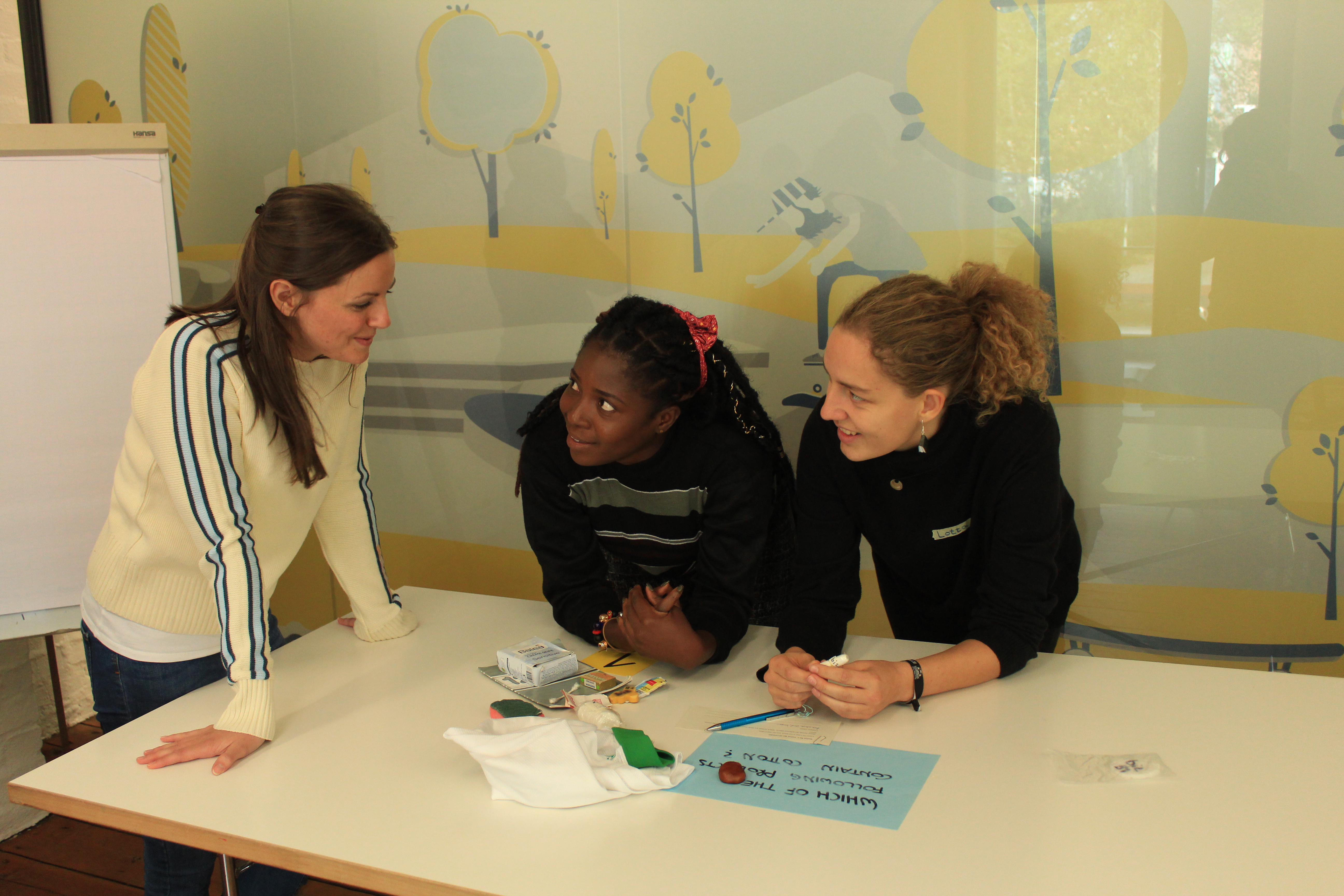
Lunch was fun as we had to led by example. We sent our own basket to avoid taking plastics from the food court. Right after lunch we „tramed„ down to Hafen museum for an exhibition on clothing. We had a brief introduction of the place and had a tour through the exhibits. We were divided into groups and worked on various questions like :

a. Which items were made from cotton

b. The value of jeans

c. What happens to old clothes that you don´t wear. Etc.

HUGE SURPRISES:

  1. Margarine and soap had some elements of cotton!
  2. Only 1% value goes to the worker and 50% goes to the retailer.
  3. How cotton travels from the harvest period to the final attire.

    After the exhibition and trying on some clothings we discussed what we could do with the help of the following questions:

A: WHAT THE INDUSTRY ACTORS CAN DO

we suggested that the governments should enforce laws and customers avoid buying many cloths.

B:WHAT WE CAN DO AS INDIVIDUALS:

Up-cycling of cloths and educating other individuals.

Coming back to the house, we felt empowered, we felt we had a task and many like us were poised for action.

Lexicon

1. Trammed – to take a tram

ISAAC NUNANA AGBEMENU

STELLA YAYRA DZIANY